The steak method

Dry-brine first.

Salt it overnight, bring a thick steak up slowly, sear it hard and fast, then give it a proper rest.
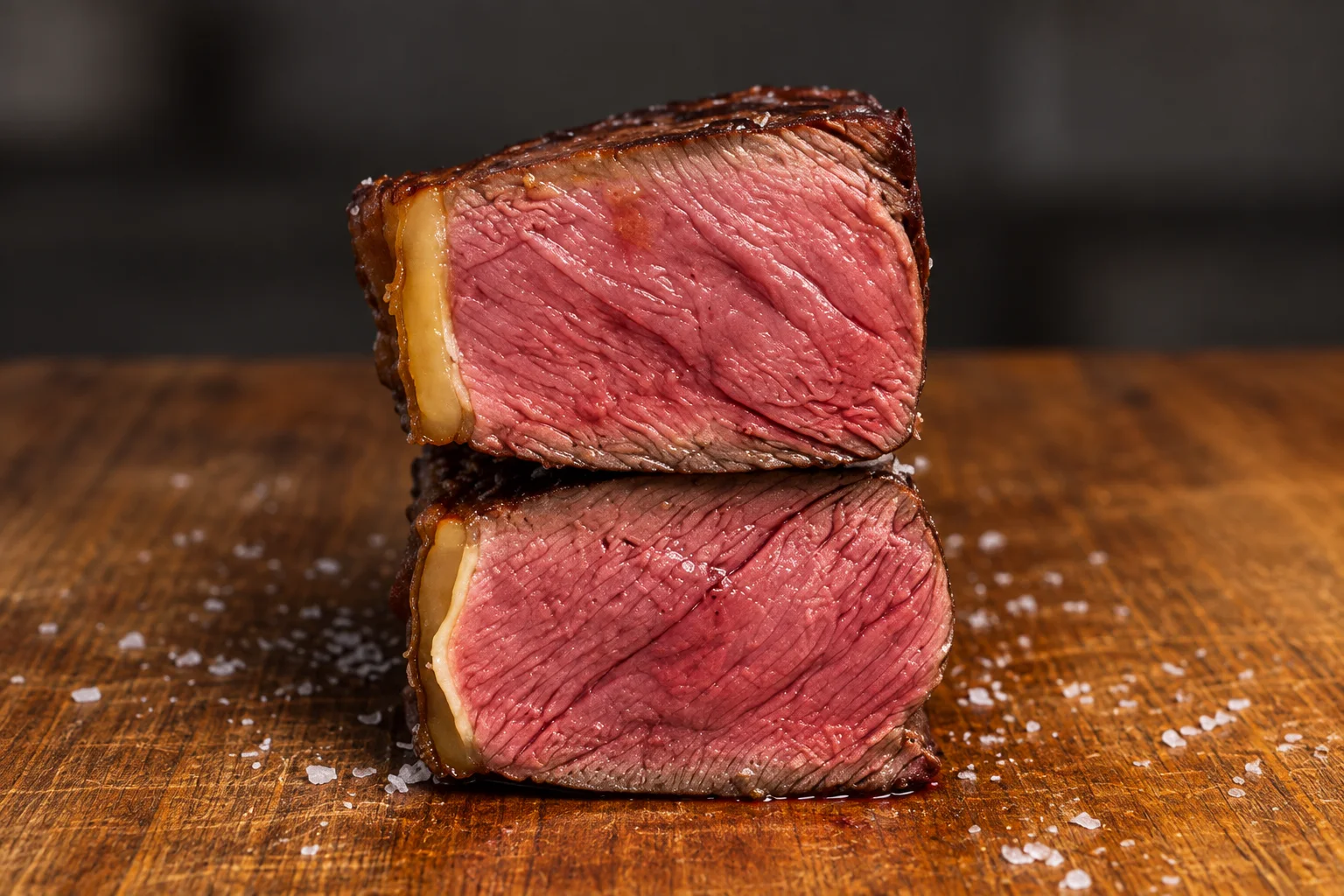
Two pieces of medium-rare porterhouse steak showing the cross-section

How to cook any steak

Four things, in this order.

Get these right and the cut almost stops mattering.

Step 1

Dry-brine

  • Salt the steak and put it back in the fridge uncovered, on a rack, overnight.
  • The moisture carries the salt back into the meat.
  • The dry surface gives you a better crust.

Step 2

Bring it up slowly

  • For a thick steak, use a 100°C oven.
  • Bring the centre to about 35°C before the final sear.
  • Use a probe—the point is an even centre with almost no grey band.

Step 3

Sear hard, sear fast

  • Use a screaming-hot pan or charcoal and turn the steak repeatedly.
  • Turn the heat off before you add butter, garlic and rosemary.
  • Baste briefly, then get it out of the pan.

Step 4

Rest

  • Rest for at least 10 minutes.
  • Give anything big a little longer.
  • Finish with flaky salt, then slice across the grain.

Why it works

The dry brine does two jobs.

  1. Salt first draws moisture to the surface, then that moisture carries the seasoning back into the steak.
  2. Leaving the steak uncovered in the fridge dries the outside so it browns instead of steaming.
  3. The low oven brings a thick cut up evenly before the hard sear, which keeps the overcooked grey band to a minimum.
  4. Turning the heat off before basting lets the pan start cooling instead of driving more heat into the edges.

Stiv’s tip

Pull it early on purpose.

The steak keeps cooking after it leaves the pan.

See this steak in practice

Watch the reverse-seared porterhouse.

This is the exact porterhouse shown above: dry-brined overnight, reverse-seared to 35°C, then butter-basted with garlic and rosemary.

Watch the original cook ↗